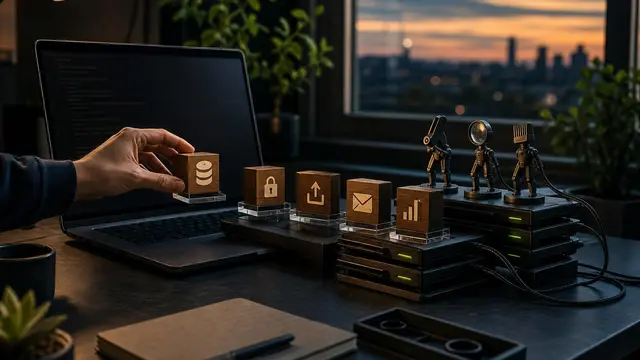
Nvidia targets Inception's diffusion language models in $500M-plus acquisition push
The GPU leader is nearing a deal to acquire diffusion-based language model startup Inception, betting on an alternative architecture to strengthen its open-source Nemotron lineup.
Nvidia is reportedly close to acquiring Inception, a two-year-old startup that builds language models using diffusion, for at least $500 million. The deal signals Nvidia's intent to strengthen its open-source Nemotron model lineup with an architecture that differs fundamentally from the token-by-token approach used by today's dominant chatbot models.
According to three people familiar with the talks who spoke with The Information, the acquisition includes performance bonuses for Inception's roughly 30 employees. The startup, based in the San Francisco Bay Area, was co-founded by professors Stefano Ermon, Aditya Grover, and Volodymyr Kuleshov, who are expected to join Nvidia full time.
What makes Inception's approach different
Most widely used language models, including those behind ChatGPT and Claude, generate text token by token. Inception takes a different route: it applies the diffusion process familiar from image generation to language. Instead of predicting one word at a time, the model refines an entire response step by step.
The startup's most recent release, Mercury 3, reportedly claimed to outperform GPT-6 Luna and Claude Haiku 5.5 while requiring a fraction of the wait time. That speed advantage, if it carries over into Nvidia's broader lineup, could matter for developers building responsive applications and agents.
Why Nvidia wants this technology
Nvidia's acquisition target serves two strategic purposes. First, it bolsters the company's open-source Nemotron models, which Palantir and U.S. government agencies already use as an alternative to Chinese models. Second, it supports Nvidia's development of physical models for robotics.
The competitive backdrop is notable. OpenAI and Anthropic are both building their own inference chips, which could reduce their reliance on Nvidia's hardware over time. By investing in distinctive model architectures and open-source offerings, Nvidia is strengthening its position beyond GPU sales.
Talks reportedly began before Nvidia CEO Jensen Huang's resignation and after Microsoft expressed interest in the startup. Neither Nvidia nor Inception initially commented on the discussions.
What it means for developers and businesses
For developers and small businesses evaluating AI tools, the deal highlights a growing divide in how language models are built and deployed.
- Open-source momentum: Nvidia's continued investment in Nemotron gives teams an alternative to closed models from OpenAI and Anthropic, particularly for use cases where data sovereignty or cost control matters.
- Architecture diversity: Diffusion-based language models are still relatively rare. If Inception's approach proves itself at scale, it could introduce new performance and latency characteristics that differ from standard autoregressive models.
- Robotics and physical AI: Nvidia's interest in physical models for robots suggests the technology may extend beyond text generation into embodied AI applications.
Nvidia has been steadily expanding its software and model footprint, offering tools like its DGX Spark desktop clusters and open model recipes for specific markets, including Korean-language production deployments.
What to watch
The deal has not closed, and neither company has publicly confirmed the terms. Key questions remain about whether Inception's diffusion approach can scale within Nvidia's broader model strategy and how quickly any resulting Nemotron improvements would reach developers.
Microsoft's earlier interest in Inception also suggests the startup's technology attracted attention from multiple major players. For now, teams building on open-source models should watch whether Nvidia integrates Mercury's diffusion techniques into Nemotron releases and whether those models remain freely available.
As the model landscape fragments across architectures, chip strategies, and open-vs-closed approaches, Nvidia's bet on diffusion is one more signal that the next phase of AI competition will not be settled by a single model design.
Frequently asked questions
How much is Nvidia reportedly paying for Inception?
At least $500 million, according to three people familiar with the talks who spoke with The Information. The deal also includes performance bonuses for Inception's more than 30 employees.
How do Inception's diffusion language models differ from standard models?
Instead of generating responses token by token like conventional models behind ChatGPT and Claude, Inception's models refine a full response step by step using the diffusion process known from image generation.
Why does Nvidia want to acquire Inception?
The acquisition aims to bolster Nvidia's open-source Nemotron models and physical models for robots, helping it compete with OpenAI and Anthropic as both companies build their own inference chips.