Artemis Security launches Orion-1 for AI cyber-defense as guardrails bite
Orion-1 is built to investigate corporate network attacks while general-purpose AI models become harder for security teams to use.
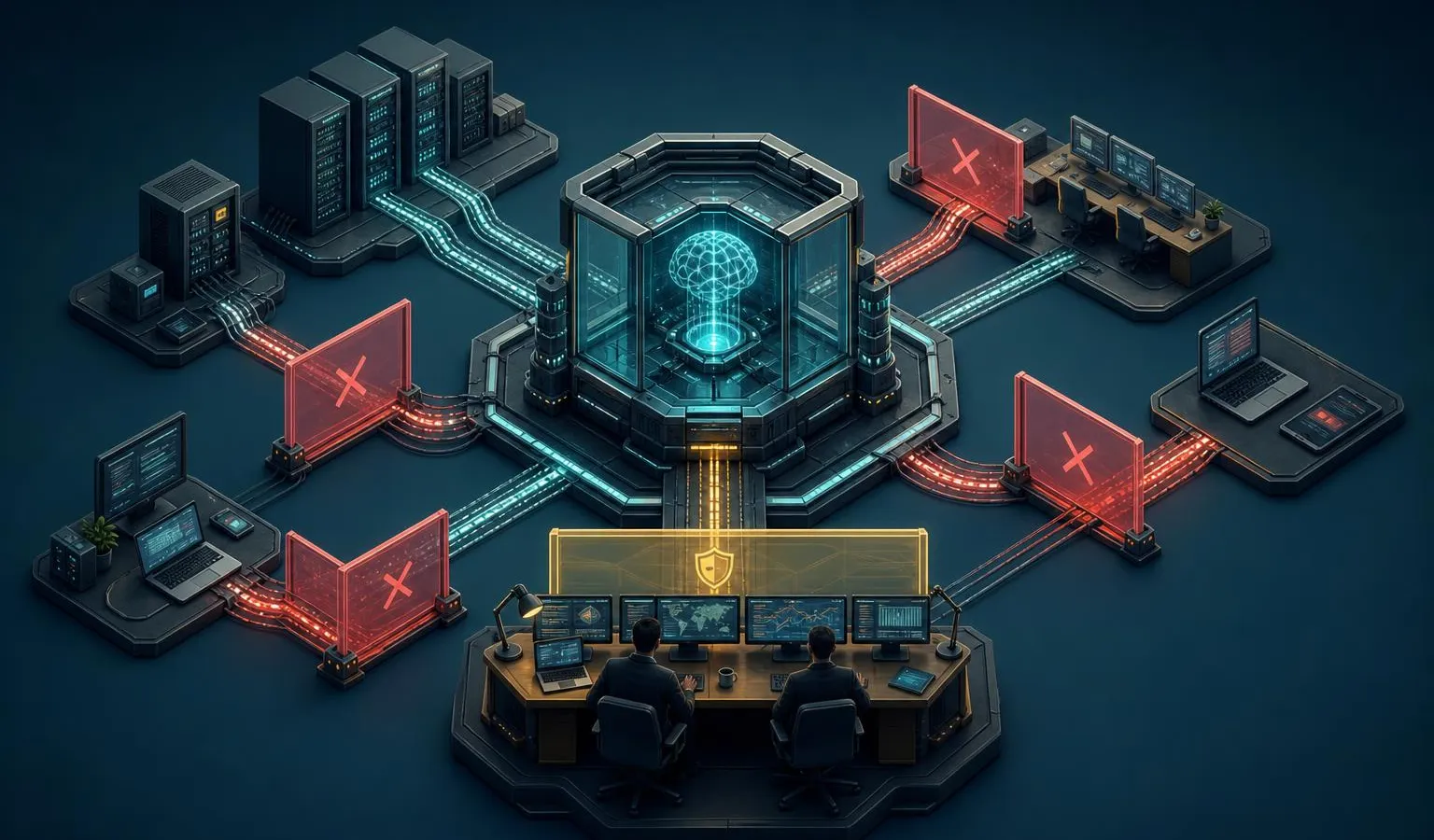
Artemis Security has launched Orion-1, an AI model designed to investigate and respond to cyberattacks across corporate networks, according to The Decoder. The pitch is aimed at a growing problem for security teams: the same restrictions meant to stop attackers can also block legitimate defensive work.
The US startup says Orion-1 connects signals from authentication systems, cloud environments, endpoints, SaaS apps and network equipment, then uses that evidence to decide whether an attack is underway. It is now live in a private preview for select customers on the Artemis platform.
What Orion-1 is built to do
Orion-1 is positioned as a security-focused model rather than a general assistant. Artemis says it can process scattered log data and link separate events, such as a corporate account login, new cloud permissions and a newly created email inbox rule, back to a single attacker.
Once the system has reconstructed an incident, the company says it assigns a confidence score, reaches a verdict and recommends or starts a response. On the Artemis platform, customers can define how much autonomy the model has for each action type. High-impact actions require human approval by default, according to the company.
For security teams, that distinction matters. A general chatbot may be useful for summarizing a small incident report or drafting a detection rule, but corporate security investigations often involve many tools, noisy logs and ambiguous signals. Artemis is arguing that Orion-1 is tuned for that narrower decision-making environment.
Why general-purpose models are becoming awkward for defenders
The Decoder frames Orion-1 as a response to the tightening of cyber-related guardrails in frontier AI models. Providers are restricting capabilities because the same skills that help defenders analyze malware, reconstruct intrusions or write detections can also support attackers.
Artemis says broad models can lose the thread when handling billions of events, or mistakenly treat harmless but unusual behavior as an attack. The company fine-tuned Orion-1 on tasks from its own security operations, including pattern detection in logs, known attack technique hunting, new detection rule writing and live attack containment. Artemis says no customer data was used in training.
The source also notes that Artemis calls Orion-1 a “Frontier Foundation Model,” while its blog post only describes fine-tuning. It remains unclear whether Orion-1 is based on an existing model from another provider.
The comparison to Claude is especially relevant because Anthropic’s model family is cited in the guardrails discussion. The Decoder reports that Claude Opus 5.5 routes most cybersecurity tasks to the older Opus 4.8, and a previous Hugging Face analysis of an autonomous AI attack was blocked by commercial frontier model guardrails. For related context, Emonarc has covered how Anthropic has tightened Claude rules on abuse and election interference and how it is offering free AI security scans for open-source projects.
Artemis’ benchmark focuses on security decisions
Artemis created its own benchmark, called Decision-Grade Readiness, or DGR, to compare Orion-1 with other models. According to the company, the test gives every model the same starting alert, environment data and tools that a security team would have, then asks whether an attack is in progress.
The tasks have known outcomes. Some include no attack at all, while others include benign data that appears suspicious. Models are scored both on the verdict and the evidence they provide.
Artemis says it tested Orion-1 against Claude Opus 5.5, GPT-6 Sol, Grok 4.7 and Kimi K3 across five tasks. The company reported the largest gap in attack reconstruction, where Orion-1 scored 80.8 versus 58.3 for the next-best model.
Those results should be read with two caveats from the source. First, this is Artemis’ own benchmark, not an independent standard. Second, the comparison does not include Anthropic’s Claude Mythos 5 or OpenAI’s strongest model, GPT-6 Astra, and the Opus 5.5 results may partly reflect responses routed to Opus 4.8.
What security buyers should watch
For small businesses and lean IT teams, Orion-1 is not being presented as a general chatbot replacement. It is a specialized cyber-defense model for organizations already dealing with corporate logs, endpoints, SaaS alerts and cloud permissions.
The practical question is whether a purpose-built model can give defenders enough autonomy without creating new risk. Artemis’ approach points to one possible compromise: allow the model to investigate and recommend action, but require approval for high-impact steps by default.
Buyers should also watch how vendors define “verified defender” access and restricted cyber capabilities. The Decoder reports that OpenAI gives less restricted GPT-5.5-Cyber only to verified defenders, while Anthropic uses Claude Mythos 5 through its security scanner and partner security products. That suggests the market may split between broad assistants with stricter guardrails and specialist models offered through controlled security platforms.
Artemis came out of stealth in April and disclosed $70 million across seed and Series A funding about six months after the company was founded. Orion-1’s private preview will show whether security teams see enough value in a dedicated model to move sensitive defensive workflows away from general-purpose AI tools.
Frequently asked questions
What is Orion-1?
Orion-1 is an AI model from Artemis Security designed to investigate and respond to cyberattacks on corporate networks.
Is Orion-1 generally available?
No. According to the source, Orion-1 is live in a private preview for select customers on the Artemis platform.
What benchmark did Artemis use for Orion-1?
Artemis used its own Decision-Grade Readiness benchmark, which tests whether models can decide if an attack is underway using the same alert, environment data and tools.