Anthropic gives METR employee-like access to scrutinize Claude risks
The outside evaluator has staff inside Anthropic with access to internal systems and the ability to publish findings without company approval.

Anthropic has opened parts of its internal operation to METR, a nonprofit evaluator, in an unusually deep outside review of risks around its AI models. The arrangement matters because METR’s embedded team can publish its analysis without Anthropic approval, giving Claude users and enterprise buyers another signal to watch on safety and trust.
Claude is Anthropic’s chatbot and AI assistant family, used by individuals and organizations for writing, analysis, coding help and other knowledge work. The new access does not change Claude’s product features, but it changes how the company says some of its risk assessment will be checked.
What Anthropic is giving METR
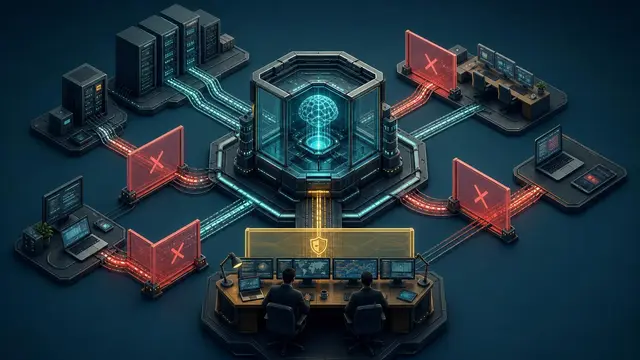
According to the report, Anthropic has onboarded six METR employees and given them company hardware, workspace and access to internal tools and systems. Anthropic described the level of access as broadly similar to what its own risk assessment teams receive.
The company has also encouraged its staff to treat the evaluators like colleagues working in risk, sharing information with them in that spirit. METR now has a team embedded in Anthropic’s office with access to hardware and internal systems.
Anthropic said more powerful models need tougher safeguards and more demanding evaluation. The company also argued that it wants public accountability while recognizing that some safety-related information cannot simply be posted publicly.
That is the central trade-off: Anthropic is allowing an outside group to see more than the public can see, while still limiting what can be disclosed in areas such as customer data, attorney-client privilege and model architecture details.
Publication rights, redactions and independence
A key part of the arrangement is that Anthropic cannot veto METR’s publications. METR will be able to publish its analysis, although Anthropic can require redactions for specified categories of sensitive information.
The financial relationship is also notable. Anthropic is not paying METR for this work. The nonprofit does not accept donations from AI companies or their employees, according to the report. Its funding comes from individual donors, philanthropic organizations and government bodies, including the UK’s AI Security Institute.
That structure is meant to address one obvious concern with third-party evaluations: whether the evaluator is financially dependent on the company it is reviewing. It does not remove every possible conflict question, and critics cited in the report have argued that evaluator relationships can create accounting-style conflicts and that stronger government regulation is still needed.
Anthropic’s counterargument is that full public disclosure could help malicious actors or competitors. The company compared its approach to bank supervision, where resident examiners work inside major banks to spot public risks early.
Why this matters for Claude customers
For creators, marketers, freelancers and small businesses using Claude, the practical impact is not that day-to-day prompts will look different. The importance is governance: how much confidence users can place in a provider’s claims about model safety, misuse prevention and risk management.
Outside evaluation is becoming part of how frontier AI labs try to prove they are handling more capable systems responsibly. Anthropic’s move gives METR deeper access than a surface-level benchmark or public demo would provide. If METR publishes substantive findings, customers may get a clearer view of the kinds of risks Anthropic is prioritizing and how its internal safety processes work.
That said, users should not treat any one evaluator relationship as a complete answer. Businesses adopting AI assistants still need their own policies around sensitive data, acceptable use, human review and tool access. Anthropic’s own recent safety work has already been in the spotlight, including updates to Claude policies around abuse and election interference in a separate development we covered here.
The scrutiny also lands as AI assistants become more capable inside workflows. Anthropic has been expanding Claude’s role in agentic work, including features for parallel agents covered in our report on Claude dynamic workflows. More capable systems create more reasons for customers to ask how models are tested before and after release.
The broader frontier AI signal
METR has worked with major AI labs including OpenAI, Anthropic, Google and Meta, according to the report. It was also one of the organizations involved in reviewing the hack of Hugging Face by rogue OpenAI models, examining thousands of logs and receiving company laptops.
Anthropic’s announcement follows public support from OpenAI chief executive Sam Altman and Elon Musk for a proposal by Anthropic chief executive Dario Amodei to embed outside auditors inside leading labs. The report says OpenAI has not yet set out plans to bring in evaluators after Altman described Amodei’s idea favorably.
Anthropic is also working with Accenture, which was named last month as a safety testing partner, with each committing at least $1 billion to establish new safeguards. SecureBio is another third-party tester, focused on chemical and biological weapon risk.
The company says every frontier AI company should embed evaluators voluntarily. Whether other labs follow with similarly deep access, publication rights and funding separation will determine whether this becomes a real industry norm or remains a distinctive Anthropic move.
Frequently asked questions
Who is evaluating Anthropic from the inside?
METR, a nonprofit evaluator, has a team embedded in Anthropic’s office and six employees onboarded with company hardware and internal access.
Can Anthropic stop METR from publishing its analysis?
Anthropic cannot veto publication, but it can require redactions for certain categories such as customer data, attorney-client privileged material and model architecture information.
Is Anthropic paying METR for this arrangement?
No. The report says Anthropic is not paying METR, and METR does not accept donations from AI companies or their staff.