1Password adds agent logins that keep passwords hidden from AI
1Password for Agents lets approved AI agents sign in to accounts without receiving the underlying credentials.
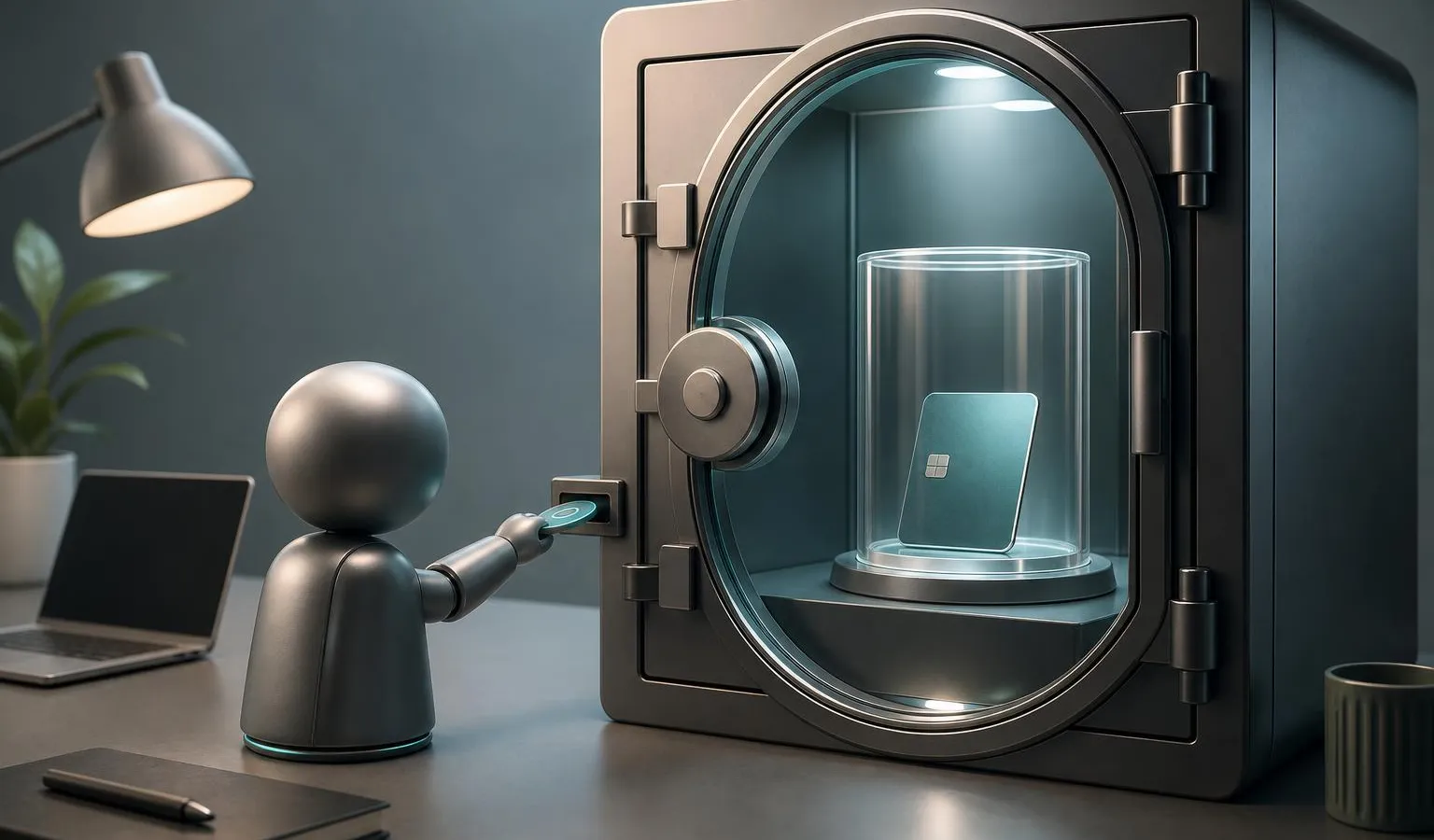
1Password is introducing a feature that lets AI agents sign in to online accounts without being shown the password, according to The Verge. The move matters because more AI tools are being asked to complete tasks inside real services, where handing over credentials can create lasting security risk.
Called 1Password for Agents, the system is designed to approve specific sign-in requests rather than give bots broad access to a user’s vault. For creators, freelancers and small businesses experimenting with AI agents, it points to a more controlled way to delegate account-based work.
How the agent sign-in flow works
Under the new approach, an AI agent that reaches a login page uses a unique digital key to identify itself to 1Password, according to the report. 1Password then notifies the user which account credentials the agent is requesting and why it needs them.
If the user approves the request, 1Password fills in the login details itself. The agent can continue its task, but it does not receive or view the password. The company says approval happens on the user’s own device, which is meant to confirm that the account owner is authorizing the access.
That makes the process closer to a permission prompt than a credential handoff. It does not mean the agent can roam across every connected account. The user still has to approve sign-in requests, and the feature is built around task-specific access rather than permanent account visibility.
1Password CEO Aashish Tripathi said in a press statement that the older pattern of giving a credential to an agent and hoping it is handled properly is not enough as agents start doing more work for users. His framing is that 1Password acts as a trust layer between the person, the agent and the accounts being accessed.
Why this matters for small teams using agents
AI agents are becoming more useful when they can operate across websites and apps, but account access remains one of the hardest parts to manage safely. A marketing contractor might want an agent to gather information from a service account, or a founder might ask an agent to complete a task that requires logging in somewhere. In those cases, sharing the password directly is usually a poor tradeoff.
For smaller businesses, the practical benefit is not just convenience. It is reducing the number of places where a password might be copied, pasted, stored or exposed. If the agent only triggers a sign-in and 1Password handles the credential entry, the password is less likely to become part of an agent’s context or workflow history.
This could also make agent use easier to govern. A user can see which account is being requested and the stated reason before approving access. That does not remove the need to review what an agent is doing after login, but it gives account owners a clearer checkpoint before the agent enters a service.
Which agents and partners are involved
1Password says the system is designed to work with several AI agents, including Meta Muse, ChatGPT Work and Dots, Claude Duet, Grok Bot and Town. The mention of ChatGPT Work connects the feature to the broader agent push around ChatGPT, while Claude Duet is part of the same shift toward assistants that can perform multi-step work rather than only answer questions.
The company also says more partners are working on support for 1Password for Agents, including Browserbase, Browser Use, Dana, Instinct, Kernel, Perplexity, Ramp, Tomo and Wajo. It also said more integrations are planned, though the source report did not provide timing, pricing or rollout details.
The agent ecosystem is moving quickly. Recent examples include commerce-focused access layers such as Walmart’s Agent Gateway, as well as model-side agent projects like Claude Duet. At the same time, websites have been pushing back on AI agents when automation strains existing access rules.
What to watch before relying on it
The key question for users is not only whether an agent can log in safely, but what it can do once inside. 1Password’s system addresses the password handoff problem, but teams will still need to think about account permissions, audit trails and whether the agent’s requested task is appropriate for that account.
Small businesses should also treat approval prompts carefully. If a notification says an agent needs credentials for a reason that does not match the task, that is a signal to pause. The feature’s value depends on users understanding what they are approving, not just tapping through a request.
Still, the direction is significant. If AI agents are going to handle real work across apps, password managers may become part of the control layer rather than just a place to store secrets. 1Password’s pitch is that agents can get into the accounts they need without turning the password itself into another piece of data the bot can see.
Frequently asked questions
What is 1Password for Agents?
It is a 1Password feature that lets AI agents sign in to accounts after user approval without seeing or handling the password.
How does 1Password approve an agent login?
The agent identifies itself with a unique digital key, 1Password notifies the user which credentials are needed and why, and approved logins are filled by 1Password.
Which AI agents does 1Password say the system is designed to work with?
1Password says it is designed to work with Meta Muse, ChatGPT Work and Dots, Claude Duet, Grok Bot and Town.