Google launches local-first AI Edge Foresight for offline meeting notes
Google’s new Mac app takes on Granola with on-device transcription, AI notes and Q&A that can work without an internet connection.
Google has released Google AI Edge Foresight, a Mac meeting note-taking app that can run fully offline, according to TechCrunch. The product puts Google into closer competition with Granola and other AI notetakers by pairing manual notes, transcripts, AI-generated notes and question-answering in one local-first workflow.
For creators, freelancers and small teams, the important shift is not just another meeting assistant. It is Google testing whether useful meeting AI can happen on the device, without needing a constant cloud connection.
What Google AI Edge Foresight does
TechCrunch reports that AI Edge Foresight is built for Mac and can capture meeting notes across apps, including from in-person meetings. The app uses Google’s on-device EmbeddingGemma 2 model, which has 740 million parameters, to work offline.
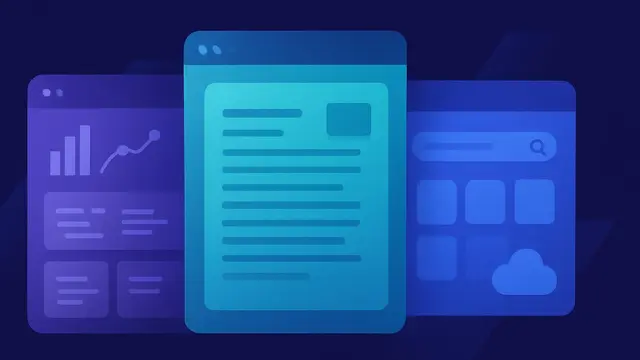
The interface sounds familiar to anyone who has used Granola. Users can type quick manual notes on one side of a split-screen view while AI-generated notes appear on the other. Google’s app also lets users view a meeting transcript and ask questions through a Gemma 4-powered assistant, according to the report.
That combination matters because many teams do not want a bot joining every call, and some meetings happen away from video software entirely. If the app can capture in-person discussions as described, it could be useful for client briefings, workshops, interviews and internal planning sessions where a conventional call recorder is not the right fit.
Offline and document-aware by design
The clearest distinction is the local-first approach. Google says on its FAQ page that AI Edge Foresight is optimized for Apple Silicon and can operate completely offline, TechCrunch reports. That means users can continue working with meeting notes while traveling or in places without internet access.
The app also supports a knowledge base built from uploaded materials. According to TechCrunch, users can add PDFs, Google Docs, Microsoft Office files, plain text, Markdown and web bookmarks. AI Edge Foresight can then use those materials alongside meeting notes to answer questions in real time when related points come up during a discussion.
For small businesses, that could reduce the need to hunt through project documents during a call. A consultant could bring proposal files into a meeting workspace; a marketer could add campaign notes; a founder could include investor materials or product docs. The value is practical: faster recall during meetings, not just cleaner notes afterward.
How it fits against Granola and other notetakers
Granola has become a reference point for AI meeting notes because it blends user-written notes with AI summaries. Google AI Edge Foresight follows a similar pattern, based on TechCrunch’s description, while adding an explicit emphasis on offline use and on-device models.
The broader category is crowded. TechCrunch notes that Wispr and Calendly have introduced their own notetakers in recent months, while Superhuman, formerly Grammarly, acquired YC-backed Fathom last month. Established productivity tools such as Otter.ai and Fireflies.ai are also part of the wider meeting transcription and notes landscape.
The choice for teams will likely come down to workflow and trust. Cloud-based meeting tools can be convenient across devices and call platforms, but local-first tools may appeal when connectivity, privacy posture or in-person capture matters more. Google’s entry suggests that offline AI is becoming a serious product direction, not only a research demo.
What to watch next
TechCrunch frames AI Edge Foresight as a showcase for Google’s Gemma family of offline models. The outlet also notes that Google’s earlier local-model dictation app was experimental and did not become a mainstream product.
A key open question is whether this remains a developer-facing or experimental Mac app, or whether Google turns the concept into a broader consumer meeting assistant. TechCrunch suggests Google could release a version that works across video calling apps through its Gemini apps while using cloud models, but Google has not announced that in the report.
For readers already comparing Google’s AI ecosystem with other assistants, our ChatGPT vs Claude vs Google Gemini guide is a useful companion. The current Foresight news is narrower: it is about meeting notes, local processing and the practical push to make AI useful even when the internet is unavailable.
Google’s move is worth watching if your work depends on interviews, calls, client sessions or workshops. The most interesting part is not that AI can summarize a meeting; it is that Google is trying to make that experience available on-device, with meeting context and supporting documents close at hand.
Frequently asked questions
What is Google AI Edge Foresight?
According to TechCrunch, it is a Mac app from Google for AI meeting notes, transcripts and Q&A that can work completely offline.
Does Google AI Edge Foresight require an internet connection?
Google says in its FAQ that the app is optimized for Apple Silicon and can work completely offline, according to TechCrunch.
What files can users add to its knowledge base?
TechCrunch reports that users can upload PDFs, Google Docs, Microsoft Office formats, plain text, Markdown and web bookmarks.